
Hey there! As a supplier of Irrigation Well Pump, I often get asked about the air-ejector system in an irrigation well pump. So, I thought I'd take a moment to break it down for you in a way that's easy to understand.
First off, let's talk about what an irrigation well pump does. In a nutshell, it's designed to draw water from a well and deliver it to where it's needed, like fields for irrigation. But here's the thing - before the pump can start moving water efficiently, it needs to get rid of the air in the suction line. That's where the air-ejector system comes in.
The air-ejector system is a crucial part of the pump setup. Its main job is to create a vacuum in the suction line, which helps to remove the air and allows water to be drawn into the pump. Think of it like sucking on a straw to get the liquid flowing. Without getting rid of the air, the pump might not be able to prime properly, and that can lead to all sorts of problems.
How does it work? Well, there are a few different types of air-ejector systems, but most of them rely on the principle of fluid dynamics. One common type uses a jet or nozzle. When water is forced through this jet at high speed, it creates a low-pressure area. This low-pressure area then sucks the air out of the suction line.
Let me give you a more detailed example. Imagine you have a Self Priming Centrifugal Water Pump with an air-ejector system. When you start the pump, water is first circulated through the air-ejector. As the water passes through the jet, it accelerates and creates that all-important low-pressure zone. The air in the suction line is then drawn into this low-pressure area and carried away with the water.
As the air is gradually removed, the pressure in the suction line starts to drop. Once the pressure is low enough, water from the well begins to flow into the pump. This process continues until the pump is fully primed and can start delivering water at the desired rate.
Another type of air-ejector system uses a venturi tube. A venturi tube is a tube with a narrow section in the middle. When fluid flows through the tube, it speeds up as it passes through the narrow part, creating a decrease in pressure. Just like with the jet system, this low-pressure area sucks the air out of the suction line.
Now, you might be wondering why the air-ejector system is so important. Well, there are several reasons. First of all, if the pump can't prime properly, it won't be able to move water effectively. This can lead to reduced flow rates, which means your fields might not get enough water for proper irrigation.
Secondly, running a pump without proper priming can cause damage to the pump itself. The impeller, which is the part that actually moves the water, can overheat and wear out more quickly. This can lead to costly repairs and downtime.
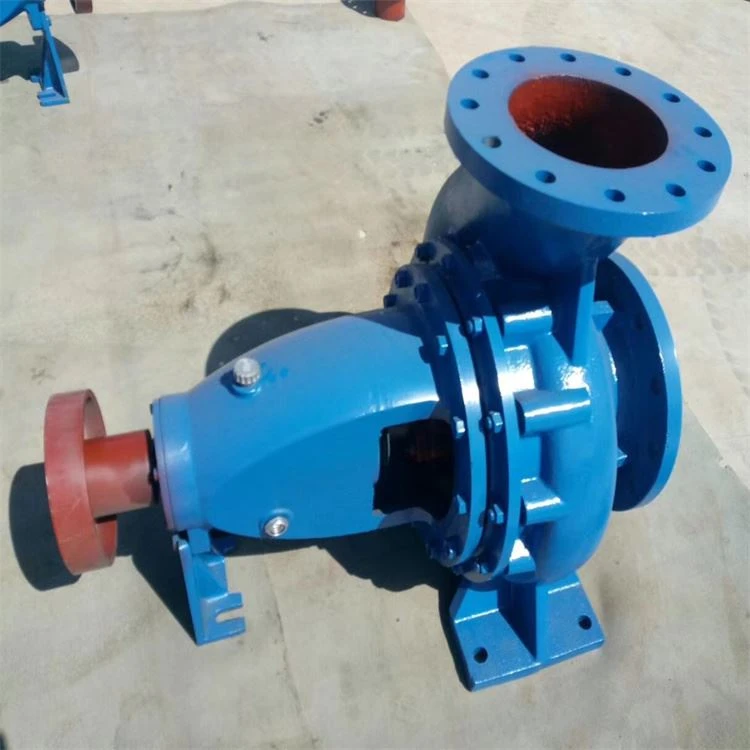

In addition, an air-ejector system can also help to prevent cavitation. Cavitation is a phenomenon that occurs when the pressure in the pump drops too low, causing bubbles to form in the water. When these bubbles collapse, they can create shockwaves that damage the pump components. By keeping the pressure in the suction line stable and removing the air, the air-ejector system helps to reduce the risk of cavitation.
At our company, we offer a range of irrigation well pumps with high-quality air-ejector systems. For example, our WFB Series Seal-free Self-priming Pump is designed with an efficient air-ejector system that ensures quick and reliable priming. This pump is ideal for various irrigation applications, whether you're watering a small garden or a large agricultural field.
If you're in the market for an irrigation well pump, it's important to consider the quality of the air-ejector system. Look for a pump that has a proven track record of reliable priming. You should also pay attention to the materials used in the air-ejector system. High-quality materials, like stainless steel or corrosion-resistant polymers, will ensure that the system lasts longer and performs better.
When it comes to maintenance, the air-ejector system is relatively easy to take care of. You should regularly check for any blockages in the jet or venturi tube. Sometimes, dirt or debris from the well can get into the system and cause problems. A simple cleaning can usually fix these issues.
You should also make sure that the water supply to the air-ejector is clean and free of contaminants. If the water contains a lot of sediment or other particles, it can clog the system and reduce its effectiveness.
In conclusion, the air-ejector system is a vital part of an irrigation well pump. It plays a key role in getting the pump primed and ensuring that it can deliver water efficiently. Whether you're a small-scale farmer or a large agricultural operation, having a reliable air-ejector system in your pump can save you time, money, and headaches.
If you're interested in learning more about our irrigation well pumps or have any questions about the air-ejector system, don't hesitate to get in touch. We're here to help you find the right pump for your needs and ensure that it works perfectly for your irrigation requirements. Let's start a conversation and see how we can help you with your water pumping needs.
References
- "Pump Handbook" by Igor J. Karassik et al.
- "Fluid Mechanics" by Frank M. White